Senior Project:
Seawolf Mutual Aid


In our last semester, Hutchins students team up with two other classmates, identify a problem, and try to do something within our power to solve it. My teammates, Kendra Vine and Lisa Bordessa, brainstormed many different problems and solutions we could do. Finally, we realized that everything we were proposing came down to one thing: mutual aid.
According to Wikipedia, mutual aid is "a voluntary reciprocal exchange of resources and services for mutual benefit."
Ultimately, we decided that we would create a Facebook group that could be a platform for those in the Sonoma State community to offer up anything they no longer needed for free: school supplies they only used for one class but were still perfectly good to use, textbooks purchased for hundreds of dollars that would be a bigger pain to resell for a few bucks than to keep, or even items or appliances they bought for their dorm that they wouldn't have room for when they went back home.
This allows students to reduce waste if they plan to throw something usable and in good condition away. Most importantly, it feels lovely to hear someone tell you that they wouldn't have been able to afford a particular textbook, for example, if you didn't give them your copy for free. Our Facebook group allows seawolves to help out their community in any way they can, even if they think what they offer may not be much. The impact could mean more than they think.
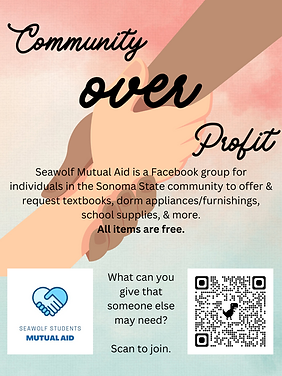


Some flyers we made to pass out when we did tabling. We also pinned one to every bulletin board we could on campus!
Our Experience:


After deciding on our platform, one of the first things we did was brainstorm about how to get the word out. We decided we would spend a day tabling. We sprinkled the table with candy to entice students to come to talk to us. Lisa also put together a fantastic gift basket we used for a raffle, where we entered the first 200 people to join our Facebook group.


As we were tabling, we heard two things over and over. First, students told us they were too young to have Facebook! That wasn't very encouraging to hear, but Facebook was the only platform that allowed students to post their own items instead of going through us to make a post for them like we would if we used Instagram. We wanted our group to have staying power after we left. It would be much easier to pass down admin privileges to monitor a Facebook group than passing down a whole Instagram account that would require constant labor from someone making posts for people.
The second thing we heard was appreciation, even from students who didn't have a Facebook! So many students told us how many books they had left over that certain places wouldn't accept when they thought they could sell them back. Others talked about how they had clothes they intended on donating but that it would be much easier to give them to someone on campus. We expected that most people would be excited about the possibility of free stuff, but we didn't hear one person mention that, while almost everyone said they had something at home they could post.

Some students who didn't have a Facebook even offered to post the flyers on the bulletin boards they had access to. It was fantastic to spot this one in the wild while walking to my math class!
Project Reflection:
As my group approached our final presentation, we asked ourselves if our project was successful.
I believe we were successful, given the amount of time we had and the unpopularity of Facebook with college-aged folks. It was a bummer that Facebook worked best for what we were trying to accomplish. If we had more time to work on this, I believe we would have been more successful (in terms of group members and activity on the page) because we would have had more time to spread the word. Additionally, since we had to do our presentation in November, I predicted that as the semester comes to an end, more and more people will take stock of things they have that they don't need, which could lead to more activity in the group.
Before we did our tabling, I expected more people to be interested in the prospect of getting free stuff. However, I was pleasantly surprised that no one who spoke to us said anything about being on the receiving end of free stuff. Actually, almost everyone we talked to mentioned that they loved the idea of a group like this and that they had lots of things they would prefer to give away to someone on campus instead of donating to a more controversial organization that is also further from campus. For me, this was the marker that we had some success with our project. The SSU community was clearly in need of a platform like this, whether we had enough time to build it up or not, and I was pleasantly surprised to learn that the students here have the desire to contribute to their community. Hopefully, we can pass our group down and leave SSU knowing we planted a seed that could help students meet their needs after we are gone.